Page History
Objectives
As you have already seen, the Web Application Layout Manager Wizard enables you to create your own layout based on one of the supplied designs and themes. Bear in mind that the appearance of this style of layout could be considerably modified by simply changing the CSS associated with it. This standard layout can then be applied to each WAM you create.
You may require your WAM layouts to closely resemble your company web site standards and appearance. If you are building a business to consumer application, then this will certainly be the case. This exercise demonstrates how you can start from your own layout and embed this within a layout weblet so that it can be applied to your WAM application.
What is a WAM Layout?
A WAM layout is a specific type of weblet that is used to give structure to the web page associated with a webroutine and to interface with any documents referenced in the layout definition for functional or aesthetic values.
By default, each WAM has an associated WAM layout weblet, which is used as the basis for any presentation associated with the WAM's webroutines. A single WAM layout is generated for each WAM regardless of how many webroutines are defined within the WAM. If your web application includes multiple WAMs, the same layout can be applied to all the WAMs in your application. This way, you can guarantee a consistent interface.
As a visual element, a WAM layout typically provides the structure for any resulting web page. In this role, a WAM layout can define any titles, menus, message presentation or logos to be displayed. The WAM layout also controls the Cascading Style Sheet to be applied.
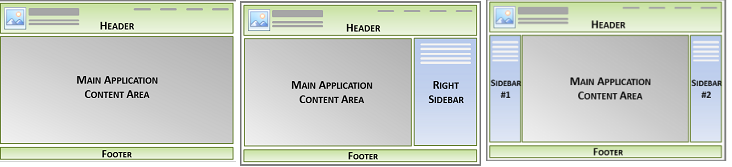
Your layout could have literally any appearance, but with transactional systems there will always be some kind of main content area, for example:
Contrary to what the name suggests, a WAM layout does not have to be made of visual elements - although it usually is.
The non-visual elements of a layout include references to XSL documents for:
...
What is a Layout Weblet?
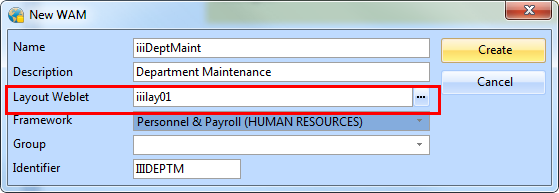
A layout weblet is simply a special kind of weblet which contains the XSL and XHTML which together with appropriate cascading style sheets, defines the content and appearance of a web page. Once you have created and tested your own layout weblet, you can use it as a common layout when creating each WAM which makes up your application.
What do Layouts Determine / Control?
The layout is a key element in the generated webroutine presentation. It ensures that a consistent interface is available across WebRoutines.
When you view your WebRoutine in the LANSA Editor's Outline tab, the layout weblet is generally at the highest level in the outline tree. This indicates that all weblets below the layout in the tree can refer to the documents specified in the layout weblet.
Some of the things controlled by layouts include:
...