Page History
...
Go to the path where RED is installed and run RedSchedulerInstaller.exe.
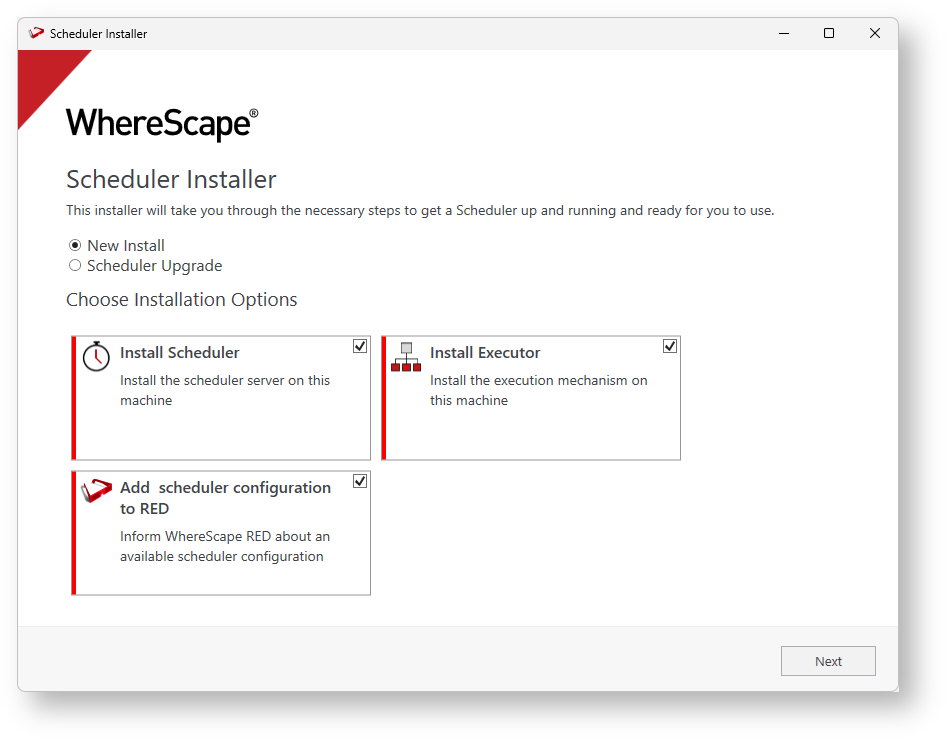
On the Scheduler Installation screen, select New Install and check all the installation options: Install Scheduler, Install Executor, and Add Scheduler Configuration to RED, then click Next.
Info Only one Scheduler can be installed per RED metadata repository. If you already installed a scheduler and only want to install another Executor, then deselect the other options.
If you want to upgrade the Scheduler, refer to Upgrading Azkaban.

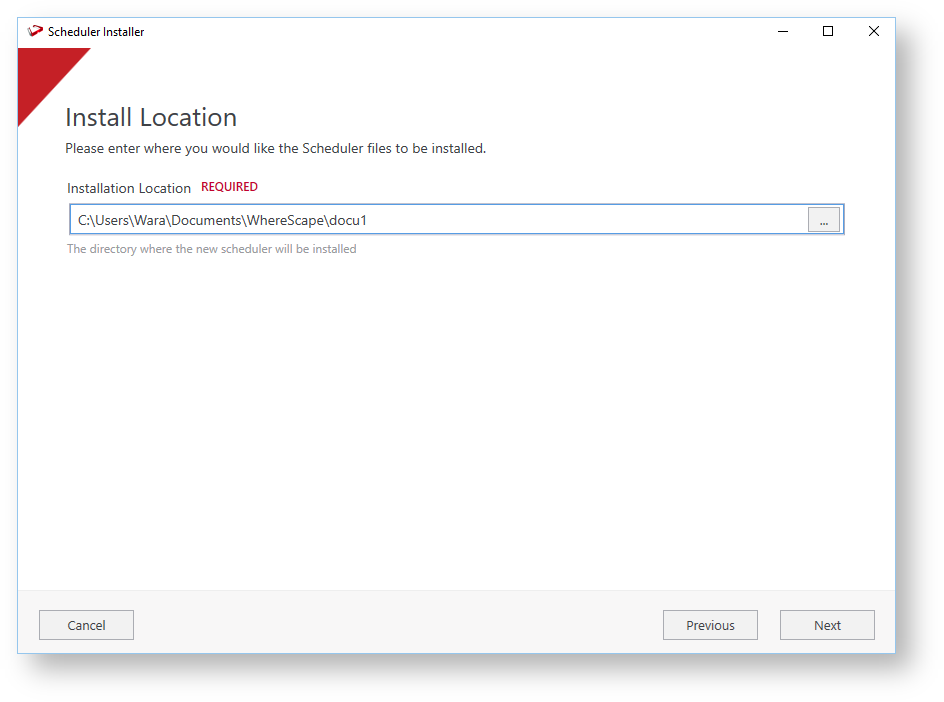
In the Install Location screen, select the Installation Location. It is recommended to create a folder under the C: disk to install Azkaban. Click Next.
Tip title Azkaban Install Location The install location must be writeable for the Service User which the service will run under so should not be installed in a directory under Windows Users. Typically, you would create a folder called Azkaban in your 'C:\Program Files\WhereScape' directory, but it can be installed anywhere on the machine that the service has write access to.

- The In the Scheduler Metadata screen shows , provide the information of the database that contains will contain the scheduler metadata. You can use a database you already created specifically for Azkaban (Follow the same steps you follow to create the PostgreSQL Database), or you can create one during installation.
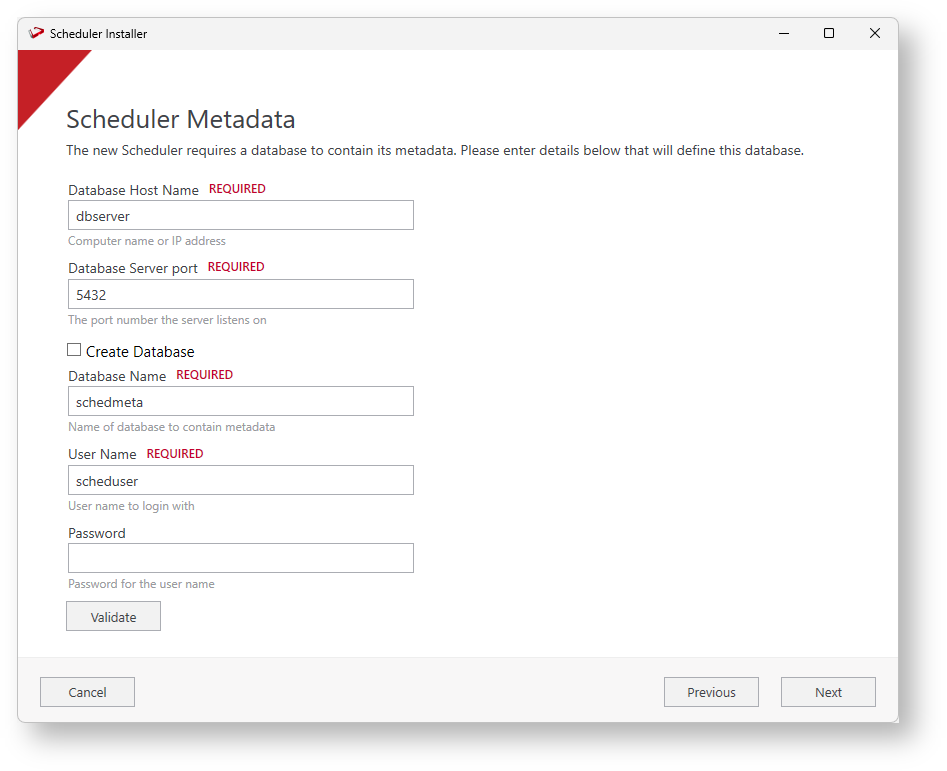
UI Expand title Using an existing database If you already created an empty database, provide the following information:
Database Host Name: Enter the database server name or IP.
connect
Database Server port: Enter the port number the server listens to.
Database Name: Enter the name of the database that will hold the scheduler metadata.
User Name: Enter the user that will login to the scheduler database.
Password: Enter the password for the user thatconnects to the scheduler database.
Click Validate to confirm that all the entered information is correct. Click Next.
UI Expand title Creating a Scheduler Database and User Select the Create Database option and provide the
followingrequired information:
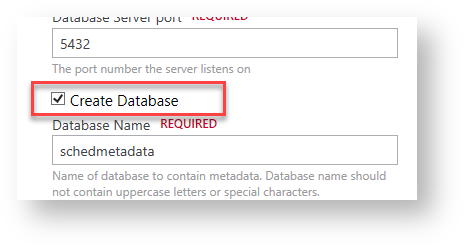
Database Host Name: Enter the database server name or IP.
Database Server port: Enter the port number the server listens to.
Database Name: Enter a name for the scheduler metadata database the installer will create.
User Name: Enter the user that will login to the scheduler database. If the user doesn't exist, the installer will create it with the adequate permissions
Password: Enter the password for the user that connects to the scheduler database.
Retype Password: Retype the previous password to confirm it.
Super User Name: Enter name of the user that can create/modify databases on the server
Superuser Password: Enter the password for the user that will create the scheduler database.Click Validate to confirm that all the entered information is correct. Click Next.
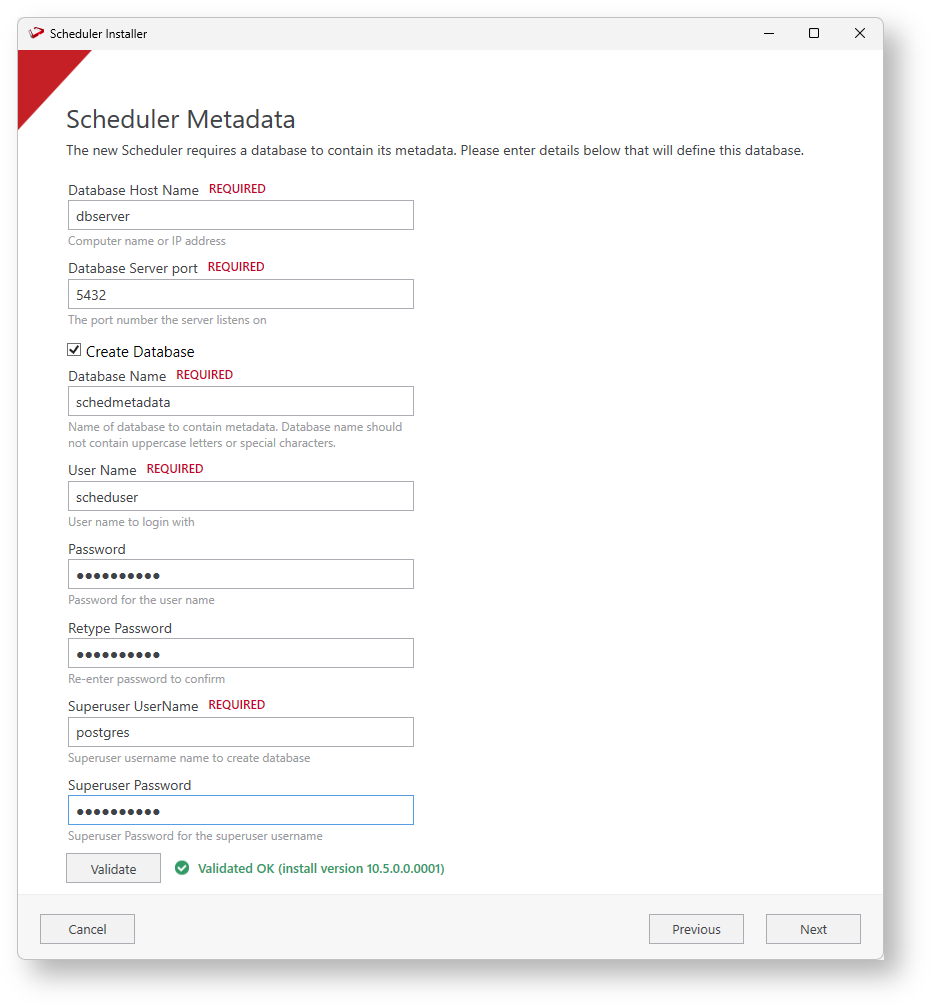
Note title Server Port PostgreSQL Database Server Port is 5432 in default installations, but your database port may be different.
- Enter the RED Metadata database information. Enter the Database Name, the User Name, and the Password. Click Validate to confirm all the information is correct and click Next.

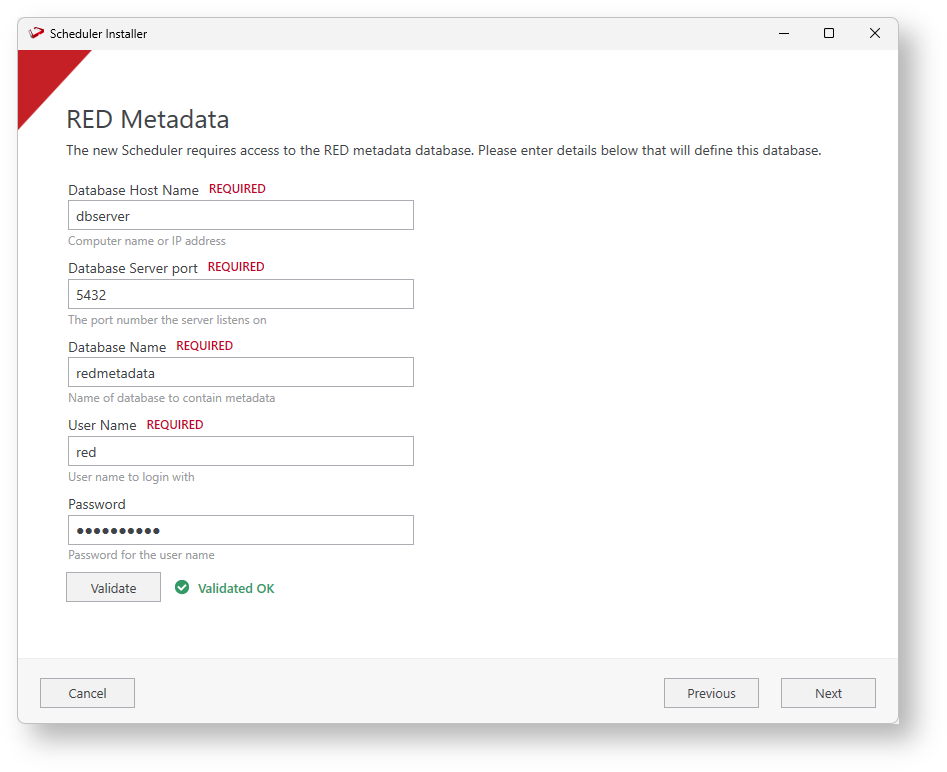
- Enter the Scheduler Metadata installation/upgrade or leave blank to use the previously entered user for Azkaban and click Next. These credentials are for an administrative database user with permission to perform DDL operations (If required).

Note title Note If you used the Create Database option, this screen will not show during installation.

The Web Server Configuration screen allows specifying the settings for the Web Server, make any changes necessary, populate all "required" fields and be sure that the option Install as Windows Service is selected before you move on. Note:
Note You can uncheck Install as a Windows Service when upgrading or when you want to manage startup of the Web Server manually. Tip title Choosing a Port The following netstat command can be run in Windows to find ports currently in use on the machine, both Azkaban Web Server and each Executor Server will require a free port to be assigned otherwise they will fail to start. If a service fails to start and the log indicates the port is already in use, you can correct the port assignment in the azkaban.local.properties file directly.
netstat -an | findstr LISTENING

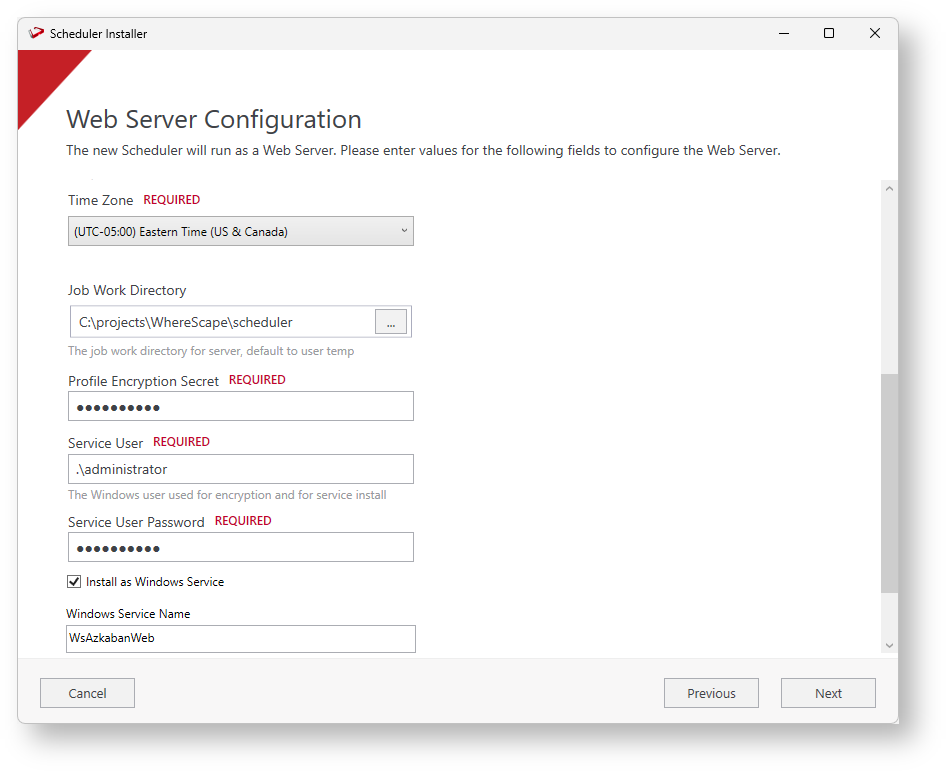
Tip title Profile Encryption Secret and Windows User The 'Profile Encryption Secret' will be used by RED Scheduler Jobs to decrypt the connection credentials at run-time, therefore you must remember and use this same password when generating the encrypted Scheduler Profile records for your connections. See Scheduler Profile Maintenance for more information.
The 'Service User' is a windows user with the 'Log On As A Service' right. This username has to be fully qualified, for local users it can be something like '.\UserName'. For domain installations, this can be "WhereScape\UserName" or "UserName@Wherescape,com". The Azkaban service runs under this user. During installation the azkaban.local.properties file will be created for each Azkaban server with Windows user-based DPAPI encrypted password values and therefore only this same Service User will be able to decrypt those passwords at run-time.
The 'Job Work Directory' is a location for any RED job related temporary files to be created. When left empty it will default to the Service User's temp directory at run-time. If you specify a value here it is important to make sure it will be writeable for the Server User, so typically you would not use a folder under the Windows Users directory.
In the Executor Configuration, click Add an Executor Tag…, enter the host name or IP address, and click OK. Click Next to continue with the installation.


Under the Email Configuration, enter the values you need to configure the email notifications, for more details refer to Configuring email. Click Next.


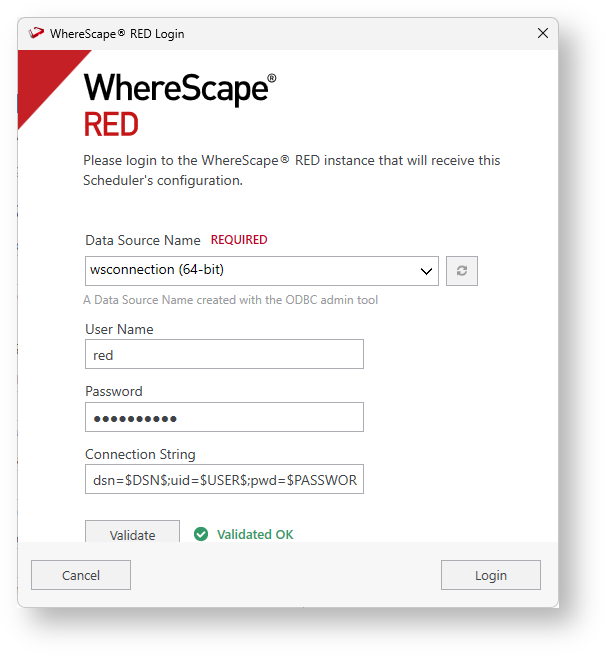
A window pops up to select the Data Source Name from the drop-down menu which is the RED Metadata database that you created previously, its credentials, Validate the data, and click Login.

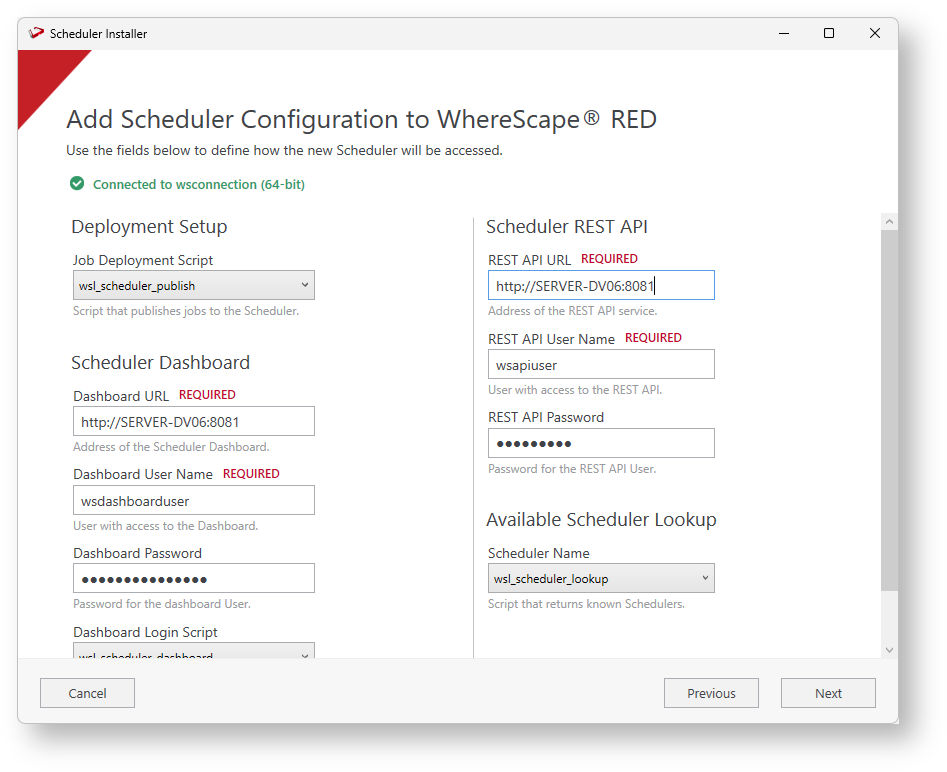
The Add Scheduler Configuration to WhereScape RED window shows the information on how the new Scheduler will be accessed. Click Next.
Tip title RED Scheduler Configuration It is important to note that the credentials for the Azkaban Dashboard User and API User are not applied to RED since these now reside only in the RED Profile file. Therefore after installing the Azkaban Web Server you will need to log in to RED and set these values in you Scheduler Configuration and then right click on 'Connections' node in the object tree to 'Save Profile' and 'include passwords'.
The default credentials used in this screen are: wsdashboarduser, wsdashboardpass and wsapiuser, wsapipass
In the Summary window, review all the information about your installation and click Install.
When the installation is complete, click Finish to close the confirmation window.
...
| Code Block | ||||
|---|---|---|---|---|
| ||||
sc create "WsAzkabanWeb wsdevrepo" binPath= "\"C:\Program Files\WhereScape\RED\WslSchedulerService.exe\" --type=\"Web\"    --scheduler-dir=\"C:\WhereScape\Schedulers\wsdevrepo\" --start-service=true --service-name=\"WsAzkabanWeb wsdevrepo\"" DisplayName= "WhereScape Azkaban Web    wsdevrepo"
sc create "WsAzkabanExec wsdevrepo" binPath= "\"C:\Program Files\WhereScape\RED\WslSchedulerService.exe\" --type=\"Exec\" --scheduler-dir=\"C:\WhereScape\Schedulers\wsdevrepo\" --start-service=true --service-name=\"WsAzkabanExec wsdevrepo\"" DisplayName= "WhereScape Azkaban Exec wsdevrepo" |
...