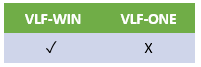
This documentation is not relevant to VLF-ONE applications.
Most commercial applications involve the use of codes and their decodes in many situations. For example:
| Country Code | Country Decode |
|---|---|
1 | North America |
61 | Australia |
44 | Great Britain |
31 | Netherlands |
64 | New Zealand |
65 | Singapore |
81 | Japan |
| Currency Code | Country Decode |
|---|---|
USD | US Dollar |
GBP | Great Britain Pound |
AUD | Australia Dollar |
JPY | Japanese Yen |
| Sex Code | Sex Decode |
|---|---|
M | Male |
F | Female |
U | Unspecified |
| Document Code | Document Decode |
|---|---|
DOC | MS-Word Document |
PPT | MS-PowerPoint Document |
RTF | Rich Text Document |
TXT | Text Document |
Application end-users need to be able to select a code from a displayed list of decodes, validate it using a referential integrity check, and decode it to present the decode on a form or in a report.
Typically, codes come in relatively short lists of less than 100 items, and thus, end-users can select the one that they want from, for example, a group or radio buttons or a drop-down combo box.
However, some code tables are large. For example, a customer code table could store 10,000 customers. To handle large code tables, you need to provide the end-user with intelligent prompting capability that allows them to quickly locate the customer they are interested in.