The WhereScape Migration tool allows you to migrate metadata repositories from WhereScape RED Classic to WhereScape RED 10+. The following sections provide information on how to install and use the WhereScape Migration tool.

Prerequisites
License
The Migration Tooling requires a 'Custom Target' enabled license. This is because the tooling will use the Custom Target database type for loading into the destination PostgreSQL RED metadata database. For customers on a traditional SQL Server, Oracle or Teradata targets your license may need to be temporarily upgraded to support the migration by adding a Custom Target.
| License Fields | Values | Migration Requirements |
|---|---|---|
| Licensed Metadata Database Type(s) | SQL Server, Oracle, Teradata | One or more of SQL Server, Oracle or Teradata |
| Licensed Target Database Type(s) | SQL Server, Oracle, Teradata, Custom | 'Custom' at a minimum |
| Licensed Custom Target Database Type | MySQL | Any Custom Target Type (see the note that follows) |
Custom Target Type
Licensed Custom Target Database Type is the label in your license given to your Custom target, this will be used for PostgreSQL targets during migration. This is just a display label for the underlying Custom target type. It could be set to anything in your own license and will be discernable in database type dropdowns by having a trailing '*'. So MySQL will appear as MySQL* in RED. For example: your license might have a label of Snowflake*, RedShift* or Synapse* but the underlying database type in RED is Custom.
Source Metadata
Source Metadata:
- A RED Metadata Repository on SQL Server, Oracle or Teradata which has a RED version of 8.6 or higher
- ODBC DSN and user with at least select permissions to the source metadata database.
Data Warehouse:
- Any data warehouse platform where the RED 10 version of the WhereScape Target Enablement Pack is available.
Destination Metadata
Destination Metadata:
- An empty PostgreSQL database to become your migrated metadata repository.
- An ODBC DSN and user with full permissions on the database (see setting up users in PostgreSQL for RED).
- Compatible PostgreSQL command line tools.
Tooling Metadata
Tooling Metadata:
- A supported RED Metadata Repository on PostgreSQL (with lowercase db name).
- ODBC DSN and user with full permissions on the metadata database.
- Compatible PostgreSQL command line tools.
Migration Tooling
- The tool should be unzipped to a local directory on the system where the migration script will be run.
- Requires a Windows user with permissions to run a cmd as administrator in order to relax the PowerShell ExecutionPolicy to run the migration script.
- The latest RED 10 version should be installed on the system running the migration with a valid license installed and the EULA accepted for the windows user running the migration tool.
- PostgreSQL tools should be available on the environment variable “Path” for the Azkaban service user. Psql.exe is used in a Powershell script to bulk load the source metadata to the target.
How the Migration Tooling Works
The WhereScape Red Migration Tool is a set of scripts and jobs that you can run from RED GUI, the scripts can be divided into three categories.
Scripts running
Installing the Migration Tool
- Launch the Install Wizard as administrator.
- Select Create a new repository.
- Configure the metadata repository.
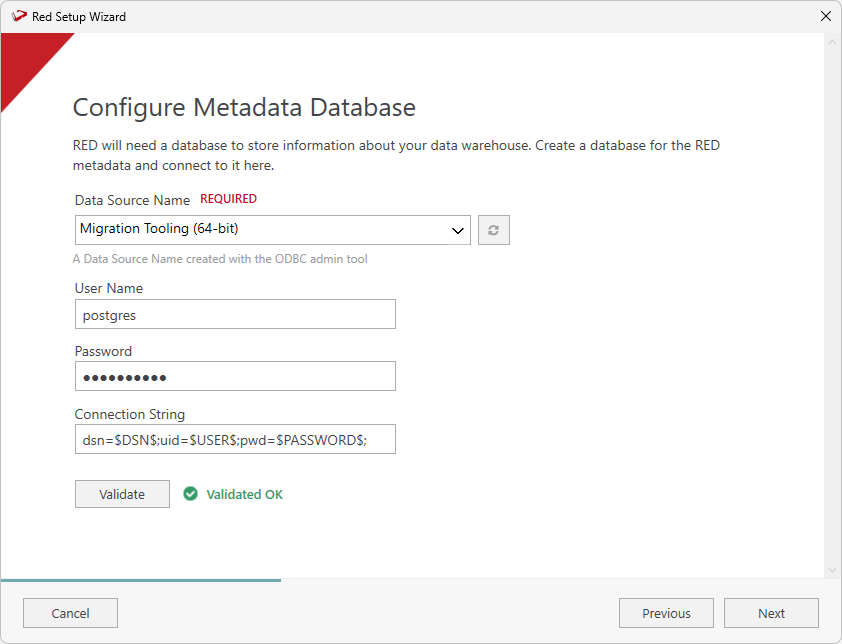
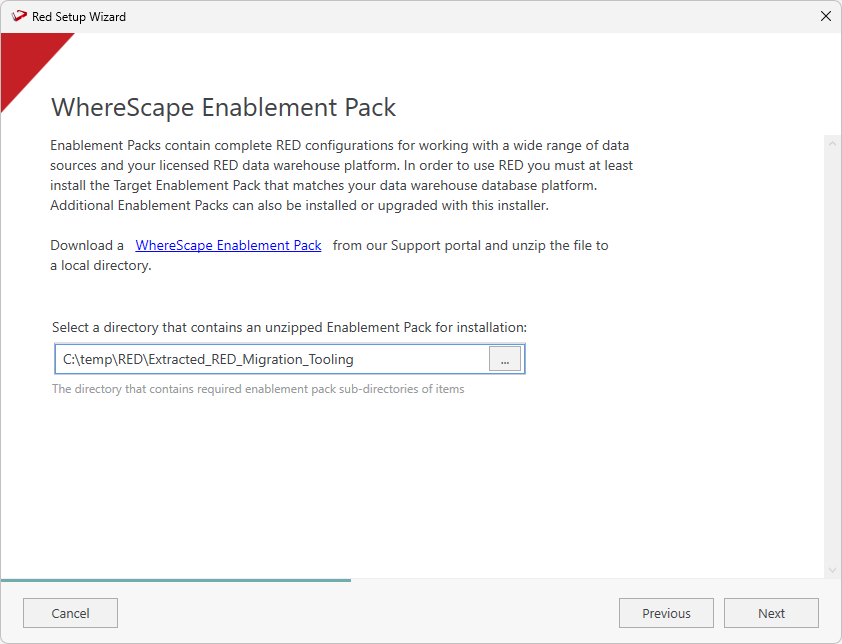
- Select the directory that contains the unzipped migration tool. Click Next.
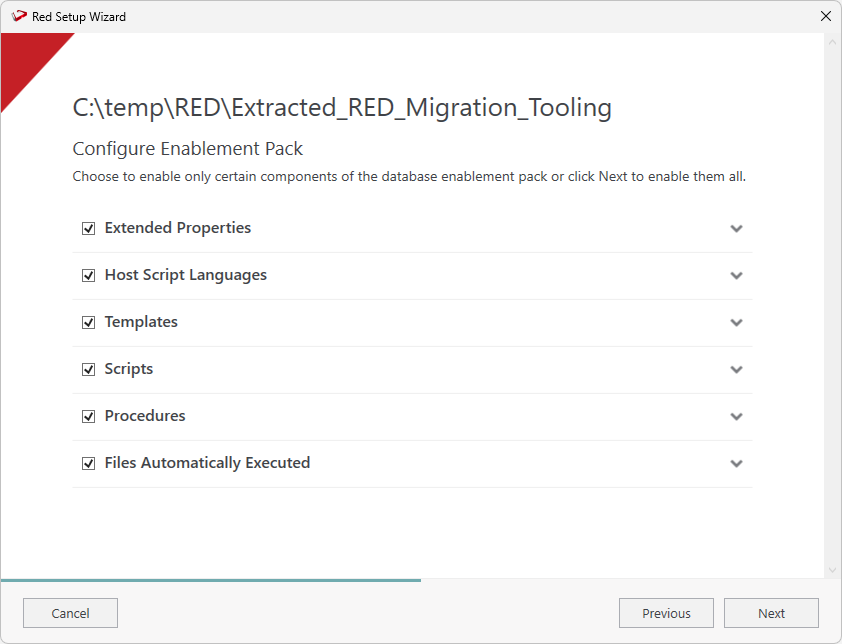
- Select the components that you want to install. Click Next.
Create Target Connections
You must create two PostgreSQL connections with the following characteristics:
| Name | Database Type | Target Name |
|---|---|---|
| Target | Custom* | red |
| Reports | Custom* | red |
*Custom will be your licensed Custom Database Target type which might have a different label in the UI than 'Custom', basically for these two connections we can't use the inbuilt SQL, Oracle or Teradata target types.
Adding the Target Connection
The connection named 'Target' will be your PostgreSQL connection to your database to house the migrated RED metadata repository.
- On the Connection Name field, ensure to enter 'Target' as a name. On the Target Storage Locations field, ensure to enter 'red'.
- Complete the other fields with the appropriate data, then click Validate to check your configurations.
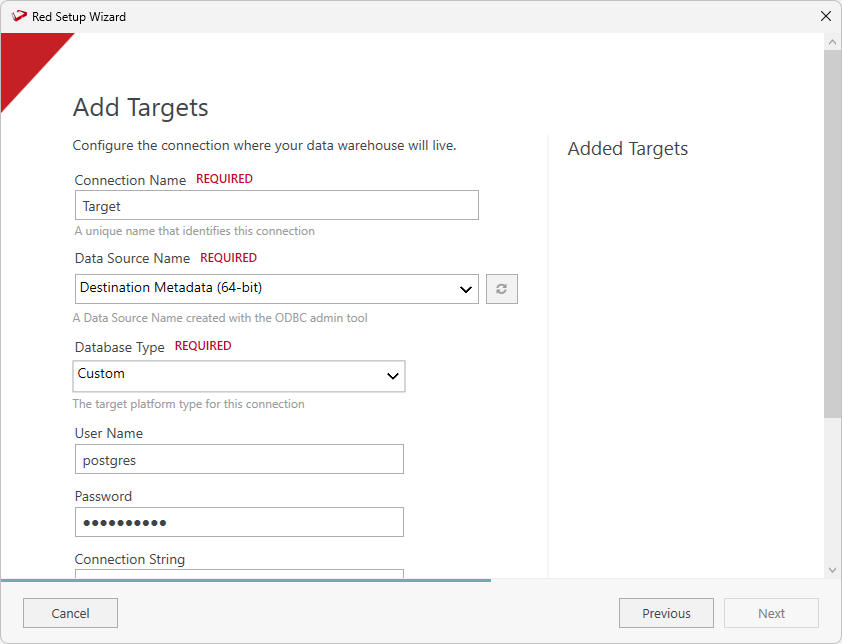
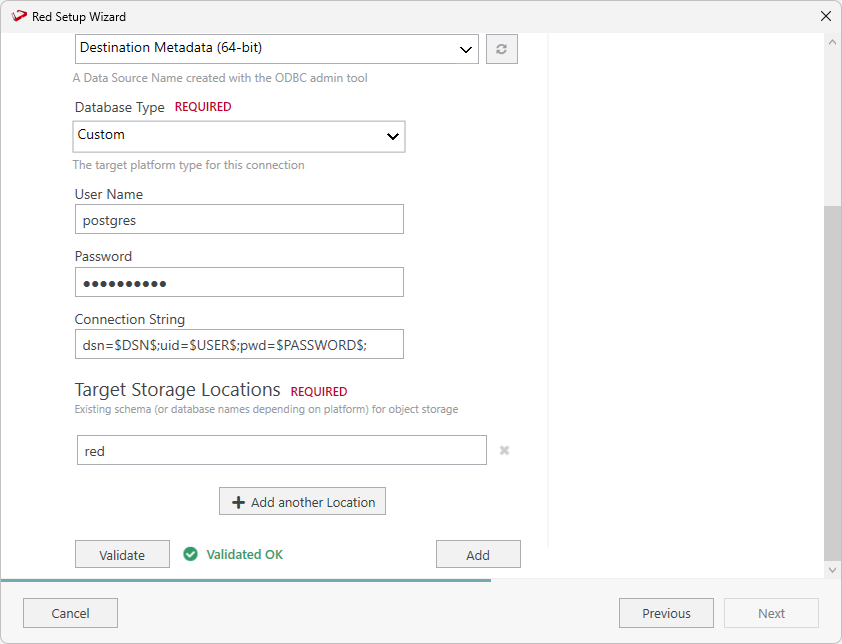
- Once you validate your configurations click Add.
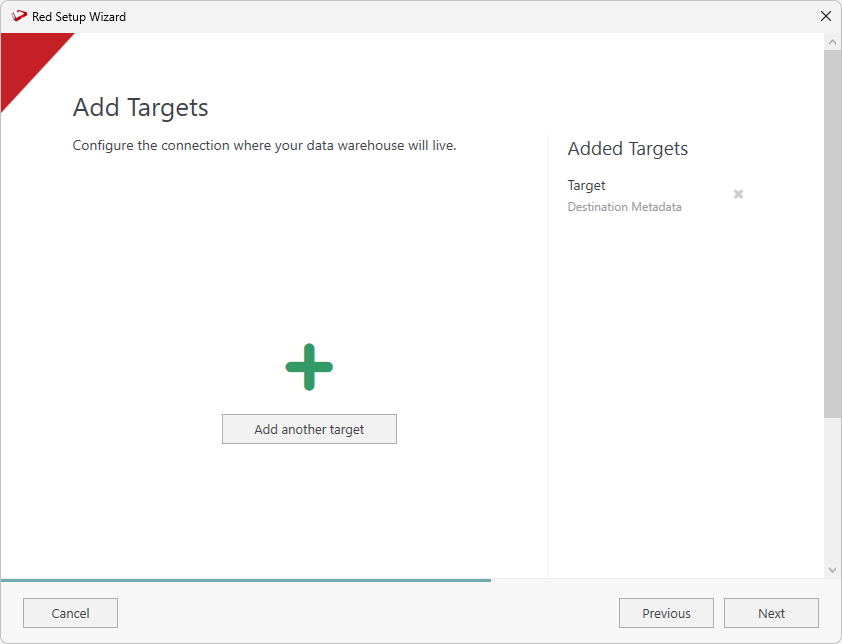
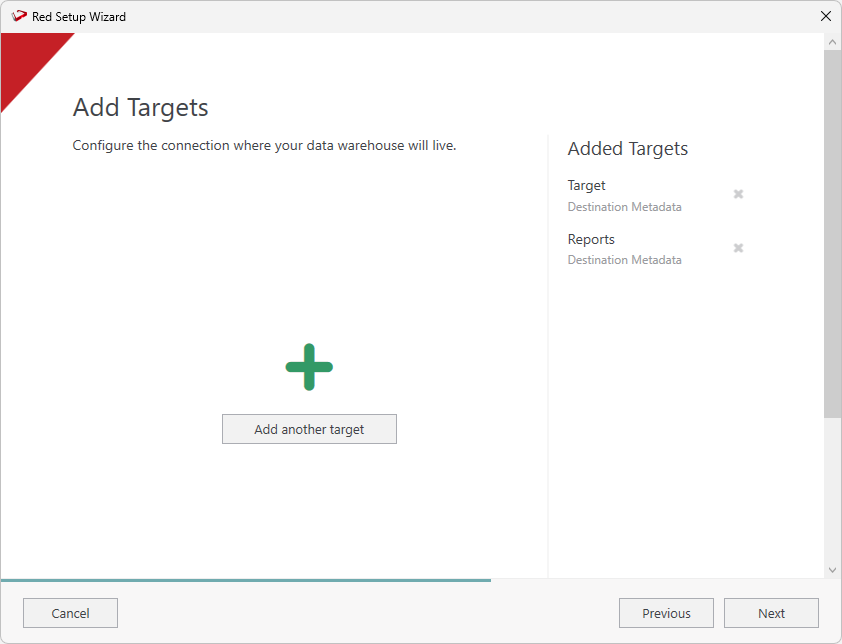
- On the Add Targets screen you will see the connection you just added. Click Add another target to add the Reports connection.
Adding the Reports Connection
The connection named 'Reports' will be your PostgreSQL connection to your Migration Tooling metadata repository, which allows us to add targets to the tooling metadata database for reporting.
- On the Connection Name field, ensure to enter 'Reports' as a name. On the Target Storage Locations field, ensure to enter 'red'.
- Complete the other fields with the appropriate data, then click Validate to check your configurations.
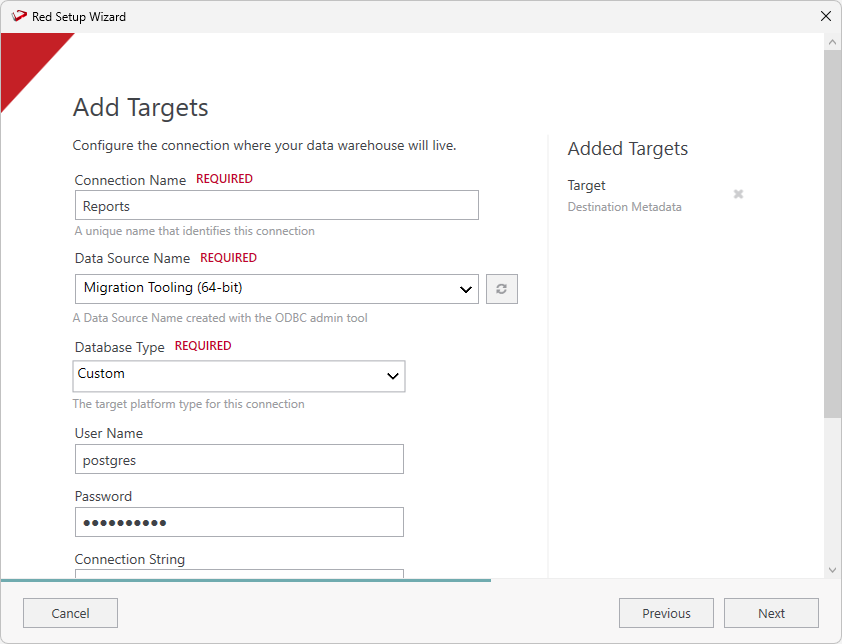
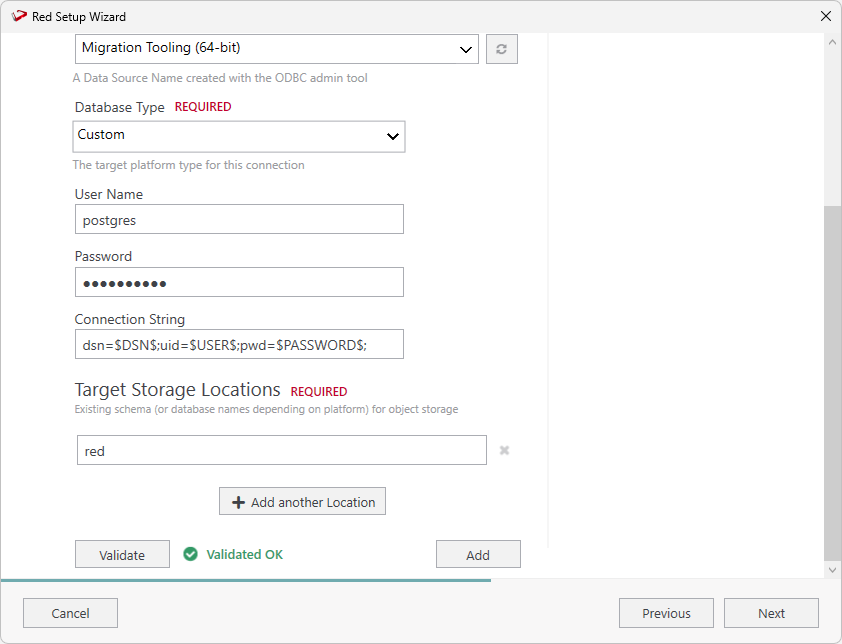
- Once you validate your configurations click Add.
- On the Add Targets screen you will see the two connections you just added. Click Next continue and add the source connection.
Adding the Source Connection
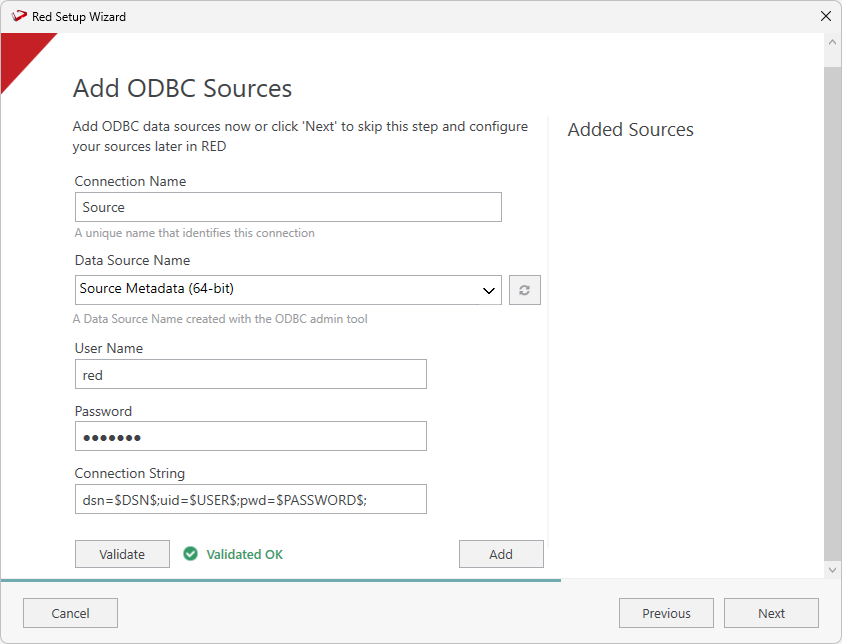
- On the Add ODBC Sources screen, configure the data source you want to migrate from RED Classic. Click Validate to check your configurations and then click Add.
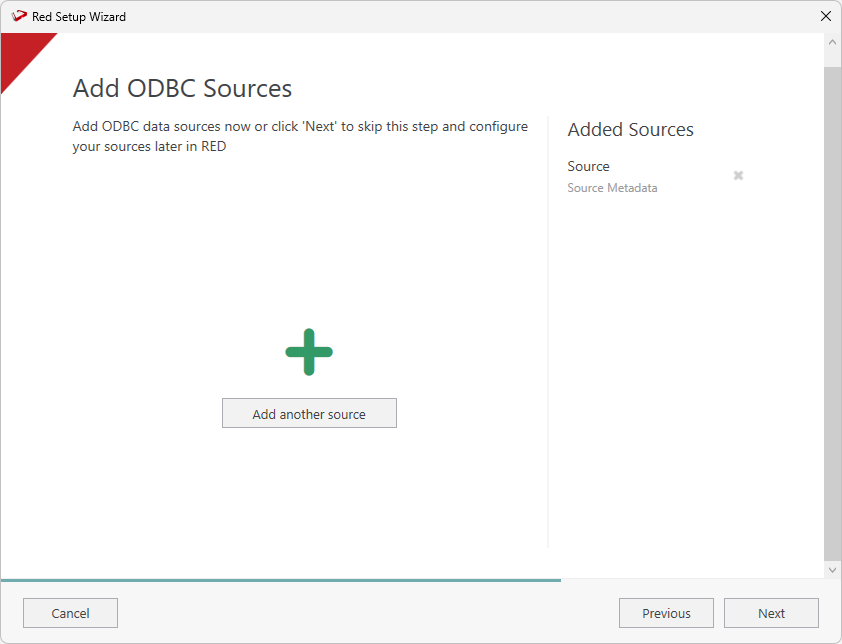
- The Add ODBC Sources screen will show the connection you just added. Click Next to continue or click Add another source to add more sources.
- On the Summary screen review your configurations are correct, you can click Previous to make changes or click Install to continue.
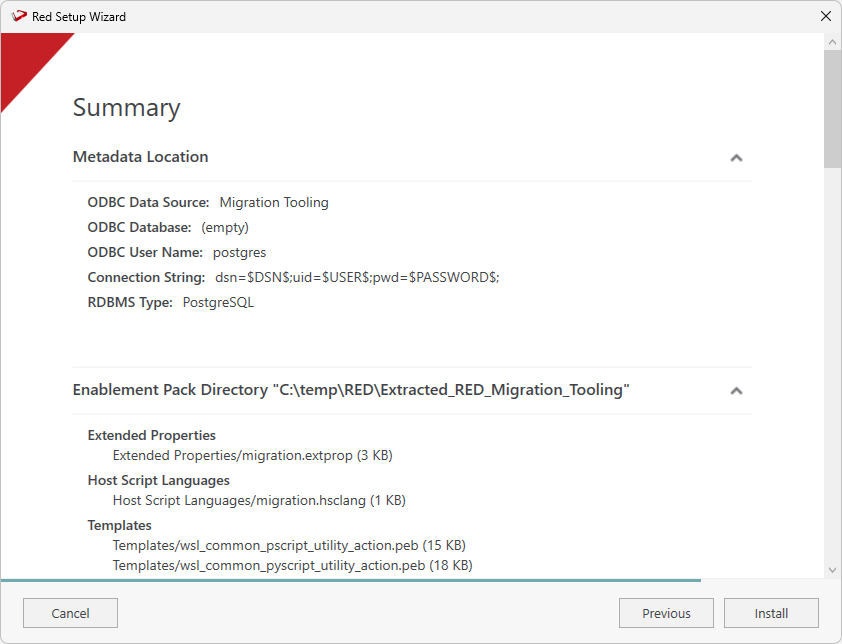
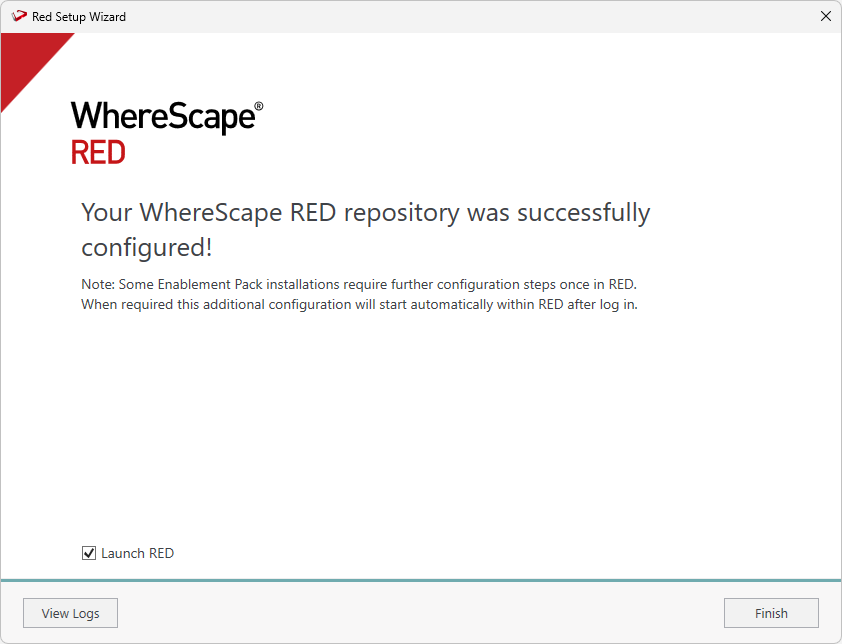
Once the installation finishes, click Finish to close the installer and launch RED.
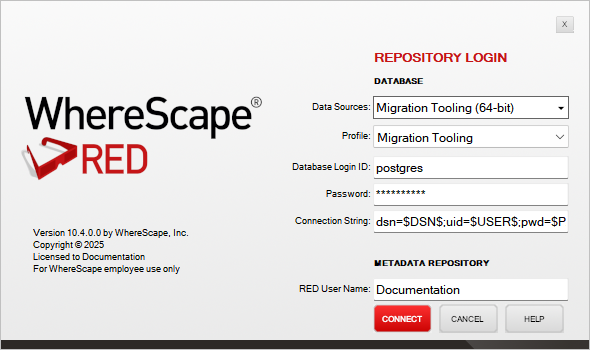
Enter your login settings and click Connect.
Migration Preparation
Migration Preparation Script
When WhereScape RED starts for the first time, after the installation steps described in the previous section, the script that prepares the Migration Tool executes automatically.
If you get failures in the Reports pane after opening WhereScape RED, then one or more of the preparation steps in the host script named '1_prepare_migration' did not succeed.
Take note of the failure message and see if you can correct the issue, then rerun the script. On subsequent script runs you may get additional failures due to the earlier run having already applied a change but in general rerunning this script will not cause issues and some failures may be dismissed.
If you have not set up the required connections, the Results pane will display a failure message similar to the image shown below. Please expand the Connections node in the left tree and add or amend connections as required before rerunning the script.

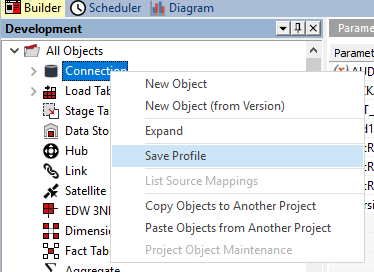
If you do add or adjust connections at this point, then ensure you 'Save your Connection Profile' and restart RED so that the in-memory profile of connections credentials is up to date.
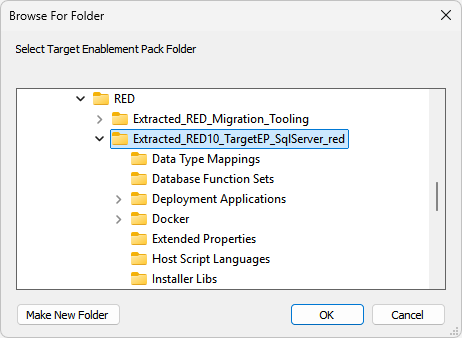
The Migration Preparation Script will prompt for two items:
- Source Repository Database Type - either SQL Server, Oracle or Teradata
- Target Database Enablement Pack - this is the location of the unpacked RED 10 compatible Enablement Pack for your licensed target
Manual Checks
- For each connection Target, Source and Reports:
- Open the connection and click the 'Derive' button to ensure the server and port fields are up to date.
- Browse the connection to ensure the credentials are working (note that the Target connection will not have any objects to display yet).
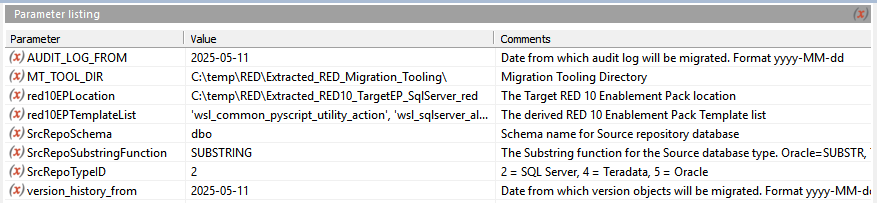
- Check the Parameters which the start-up script added make sense for your environment:
Setup the Migration Tool Scheduler
Install
Next, we'll need a Windows Scheduler installed to perform the migration tasks. Follow the Windows Scheduler Installation instructions to install a WhereScape RED Scheduler
Remember your Profile Encryption Secret for later entry into the Scheduler Profile Maintenance wizard.
Configure Local Credentials
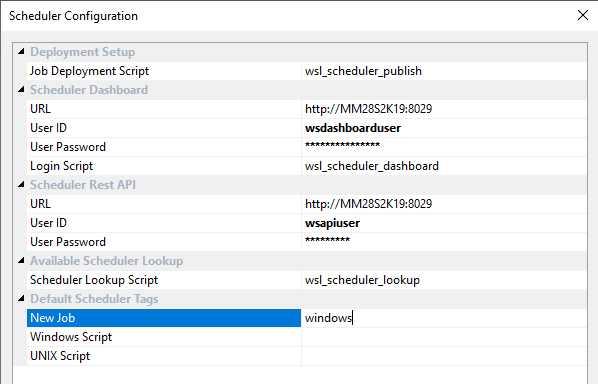
After installing the Scheduler ensure to enter your scheduler credentials into the Configuration page of the Scheduler tab in RED, then Save your Profile again to ensure your credentials are preserved between RED sessions.
Configure Scheduler Credentials
Before running any jobs, you must first setup the Scheduler Profile which adds the encrypted connection credentials rows for the connections in RED. This makes those credentials available to scheduled jobs. To do this run the Host Script 'wsl_scheduler_profile_maintenance'
You will need your Profile Encryption Secret added during Scheduler installation.
Publish and Run jobs
-
Run the Migration Jobs
-