Page History
...
- Access to a Teradata (Target Environment), with the following connectivity information:
- Server Name
- Database Name
- User Name
- Password
- At least one database available to use as a RED Data Warehouse Target with permissions CREATE, EXECUTE, DROP, SELECT
PROCEDURE.
- Create Database and ODBC DSN Teradata ODBC driver (64-bit)
- Add ODBC DSN for Teradata Target Database
- The 'Return Output Parameters As ResultSet' option is to be checked in the driver options setting.
- Software installation
- Install the necessary Teradata Tools and Utilities (TTU) (TBuild CLI Tool) as per Teradata's documentation.
- Python 3.8 or higher
- Select "Add Python 3.8 to PATH" from installation Window
- Pip Manager Install with command: python -m pip install --upgrade pip
...
Run Setup Wizard as administrator
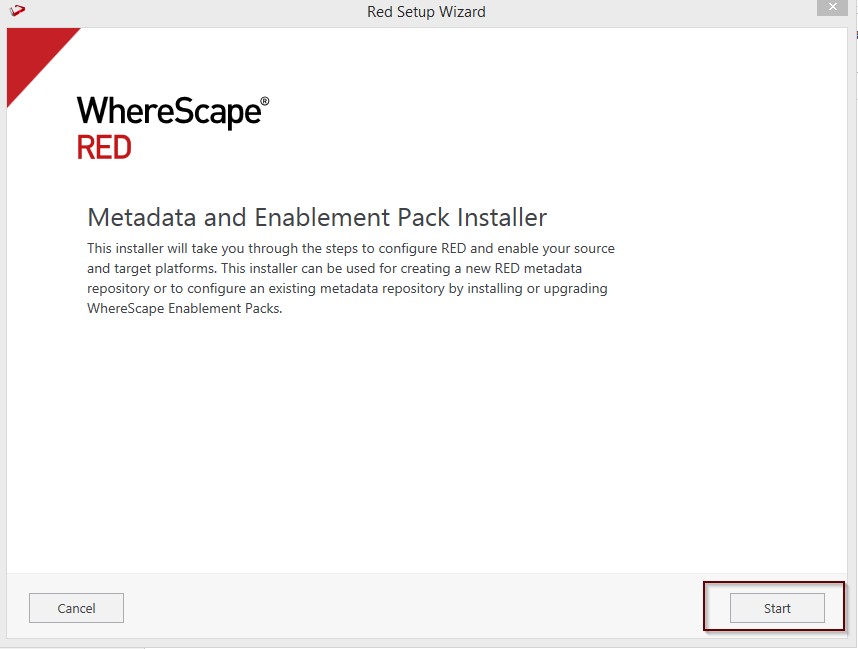
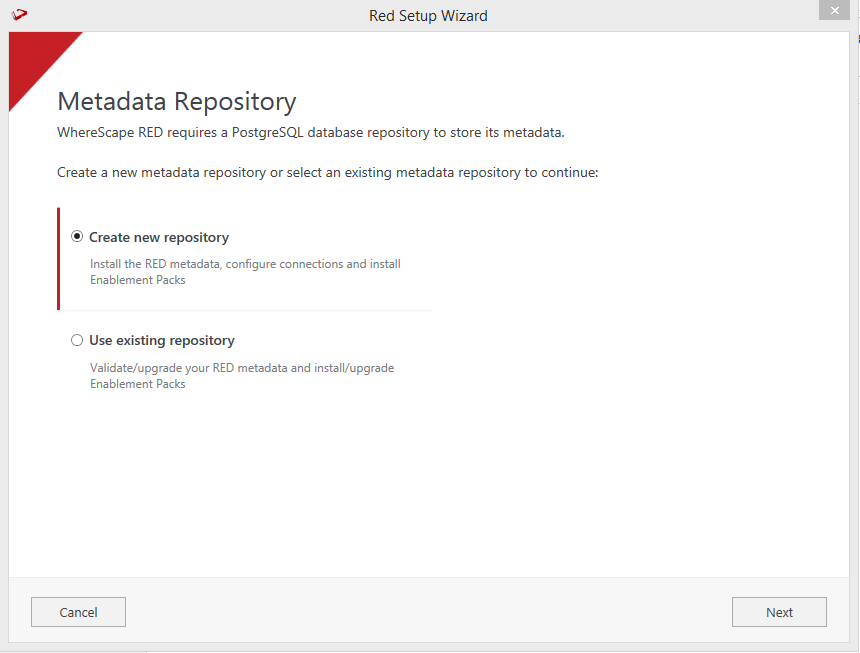
Create a new repository or upgrade an existing repository.
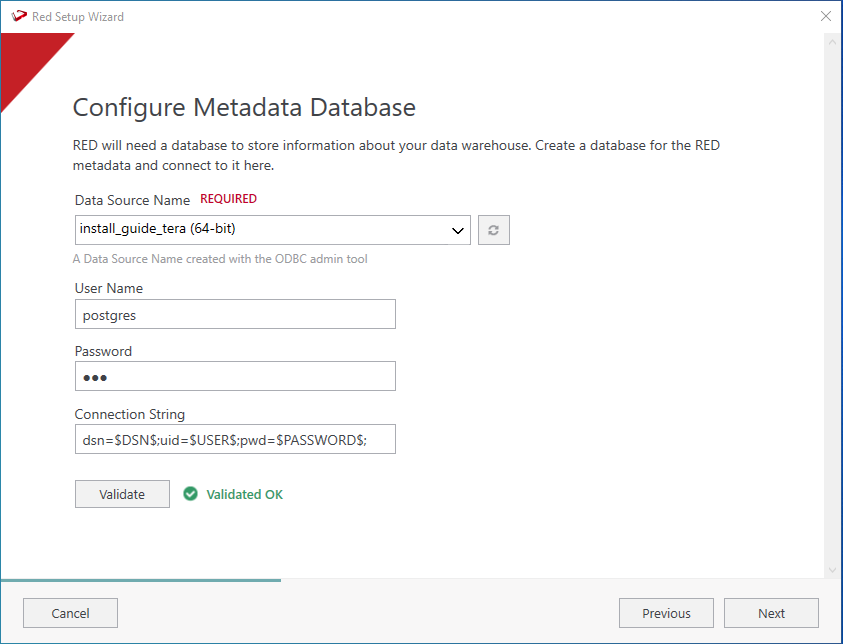
Select the created ODBC DSN, input login details, and then select Validate. Click Nextselect Validate. Click Next.
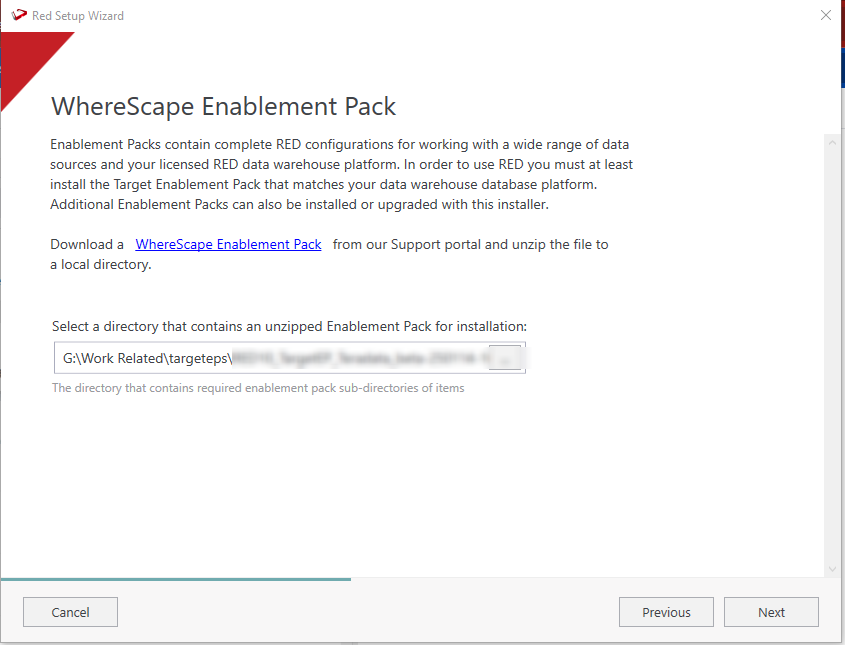
Select the directory that contains the unzipped Enablement Pack for installation. Click Next
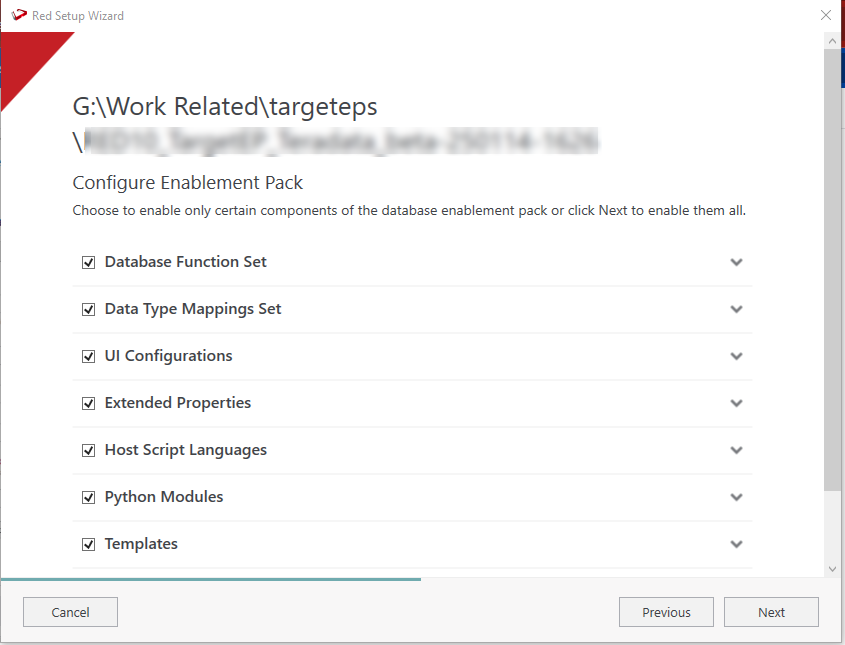
Using the check boxed list, include or exclude the components that are to be installed. Click Next
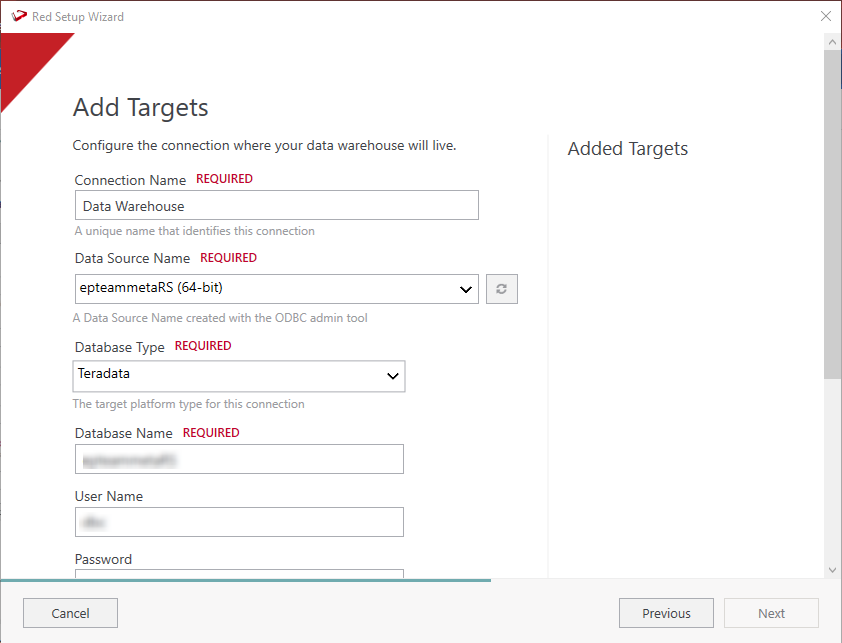
Configure a target connection (for example, Data Warehouse) and its target locations. Validate and click Add.
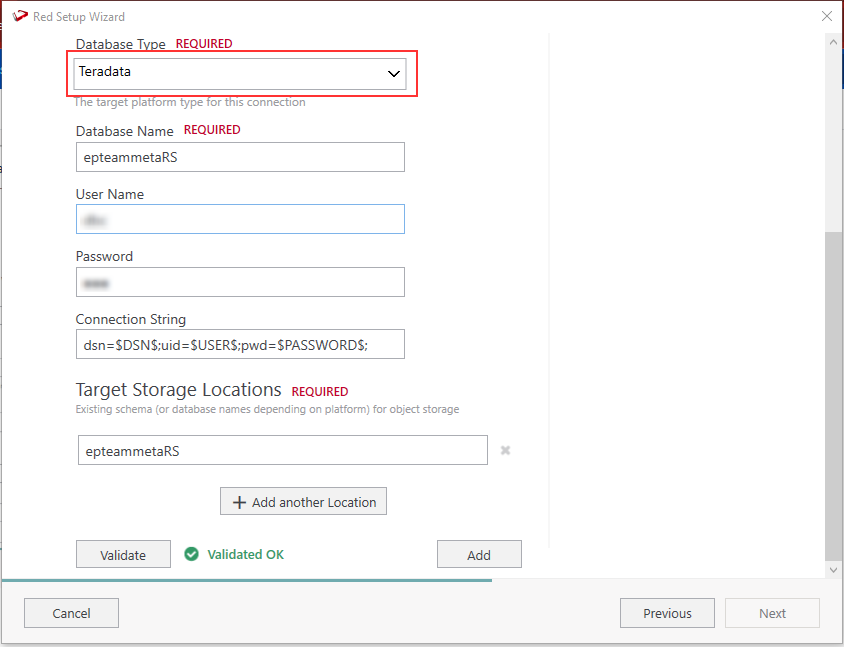
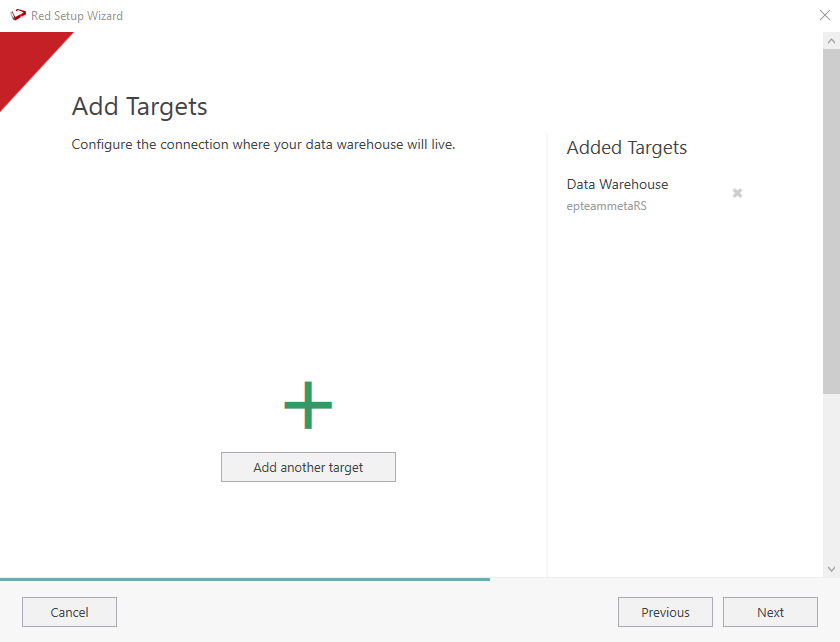
When done, click Add and then Next to continue.
Configure a data source connection (optional) and its target locations. Validate and click Add. Click Next to advance.
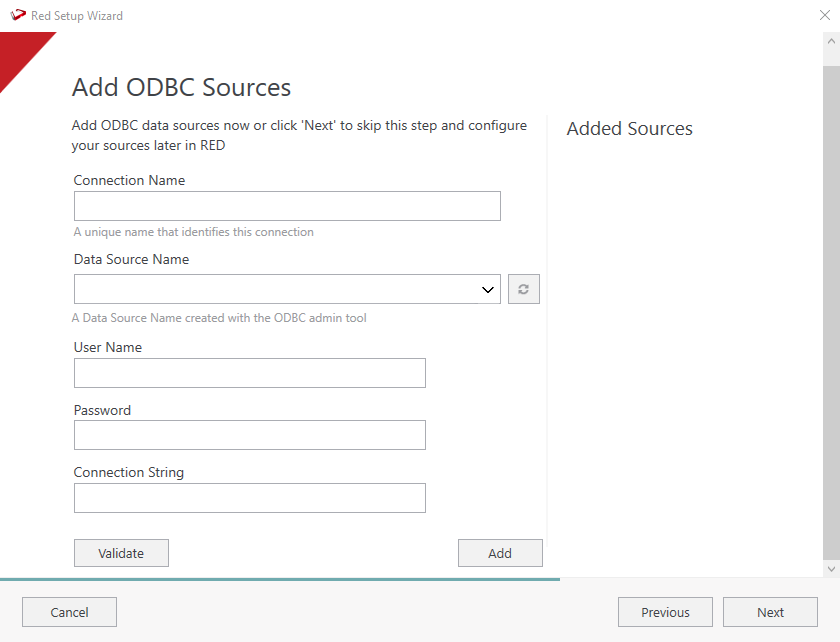
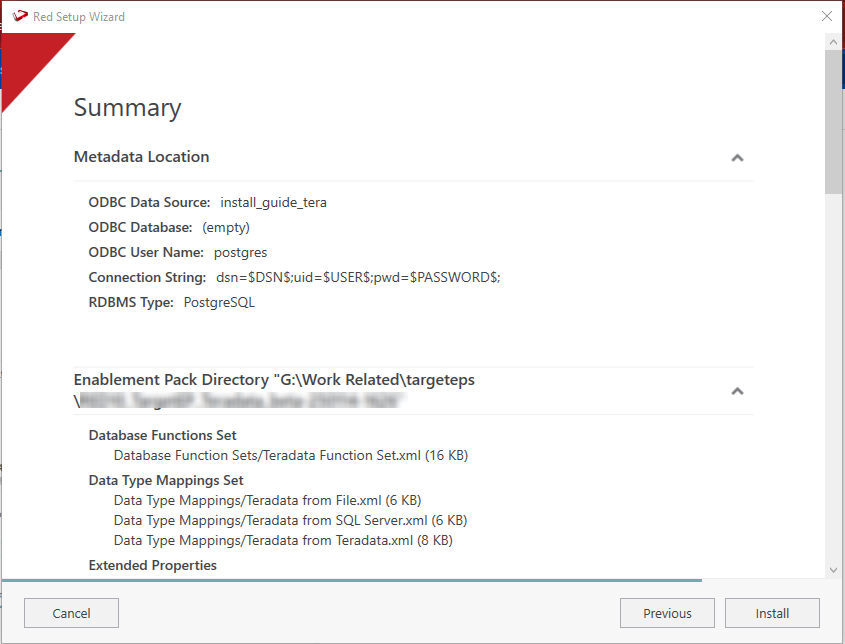
Review the installation summary and click Install.
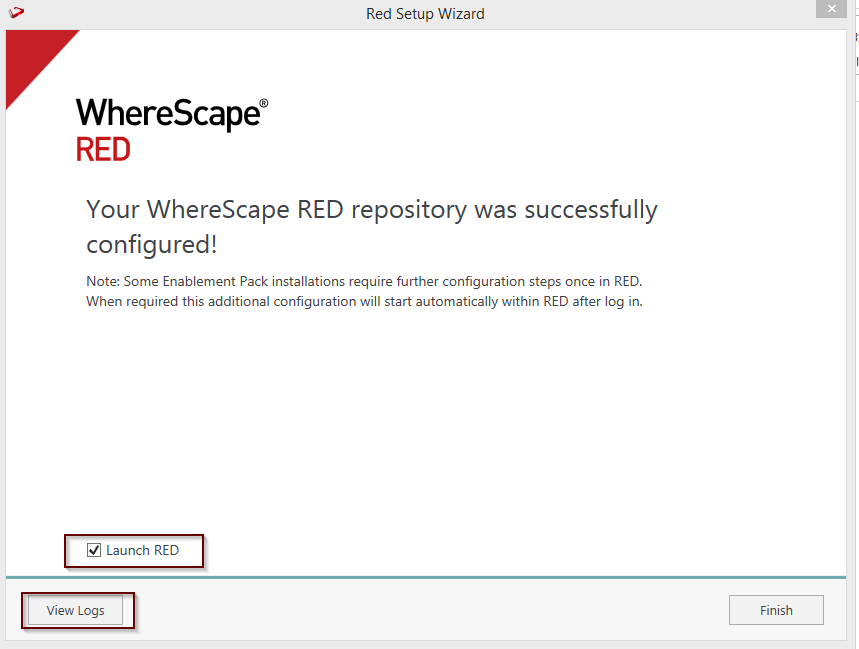
Click View Logs to open the installation log. Click Finish once the installation is completed successfully.
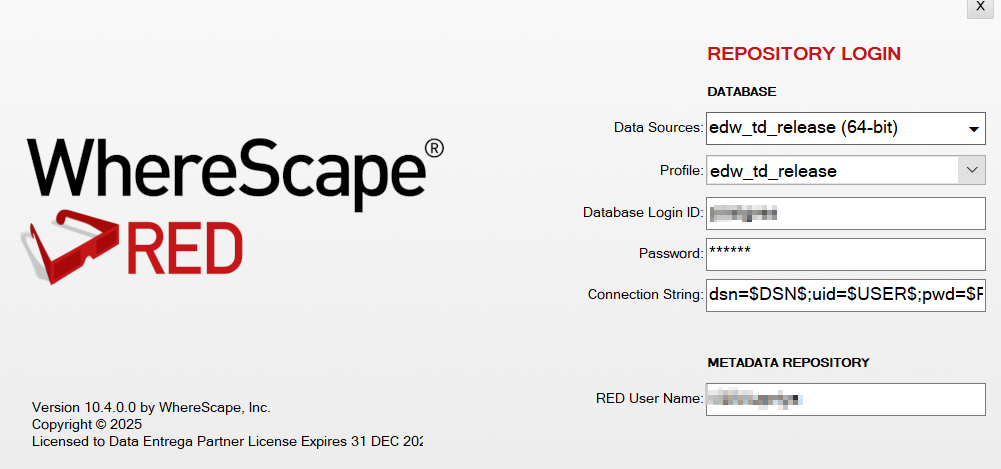
Login to WhereScape RED.
| Note |
|---|
There is a post-install script that will run at the first login to RED10 to complete the post-setup wizard installation process. |
You will be directed to the below PowerShell window which will give a brief explanation about the post-installation process.
Click OK to start the post-installation. If you click Cancel the installation stops and you are directed to RED.
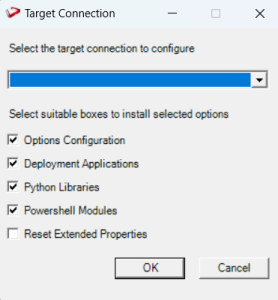
You are directed to the window below, where you have to select the target connection to be configured. Additionally, by deselecting the
provided options, you can choose not to install a particular option. "Reset Extended Properties" is deselected by default.
You will be directed to the PowerShell window below. Provide the directory that contains the unzipped Enablement Pack.
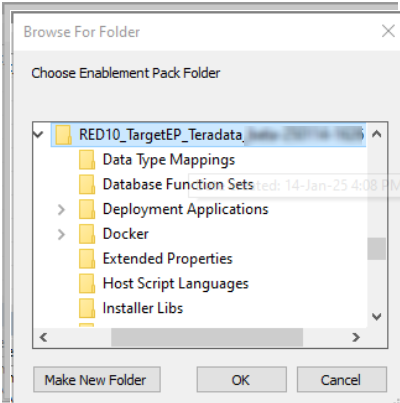
Click OK
You will be directed to the window below, choose to create a new profile or use an existing one.
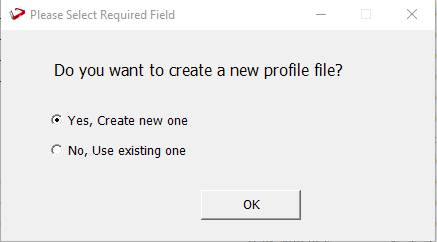
If you select 'Yes,' you must enter the data warehouse details. If you select 'No,' you must choose an existing profile file to use.
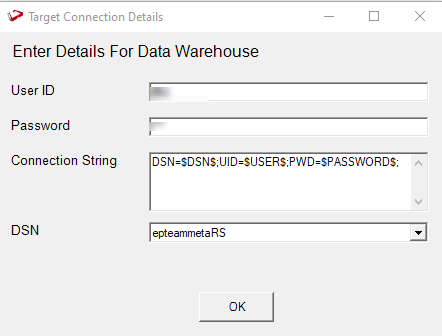
Enter a profile name.
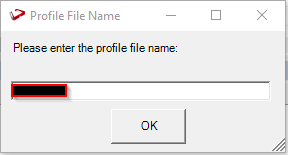
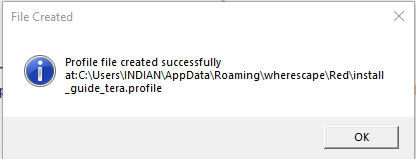
Profile gets created successfully.
The progress bar will show the post-installation progress.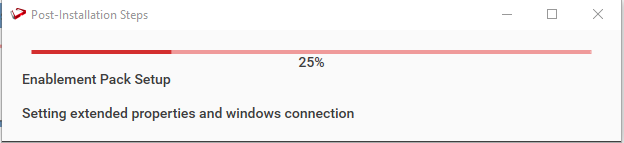
You will have to choose the database for the target settings that were provided. One pop up will come for setting a default target for Date Dimension.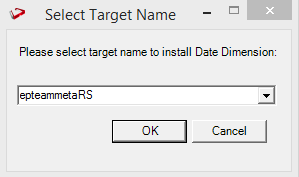
After selecting the target schema a progress bar will show the progress for the installation and once it's completed, you will get the below pop up.
After clicking OK RED10 opens automatically.
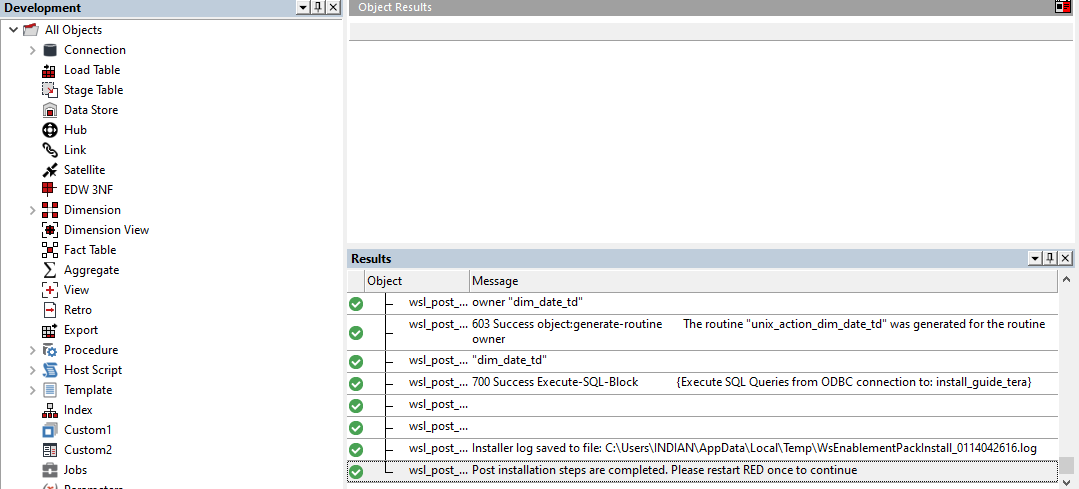
You need to restart RED once.
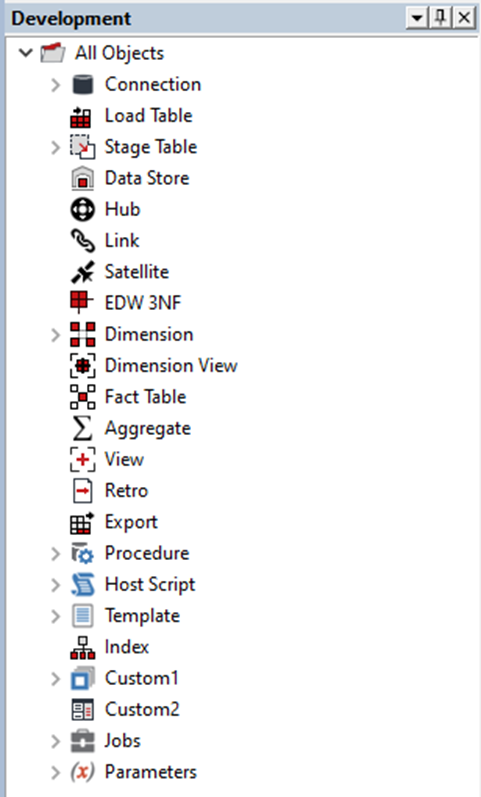
Upgrade Of Existing Repository
For upgrade of existing repository
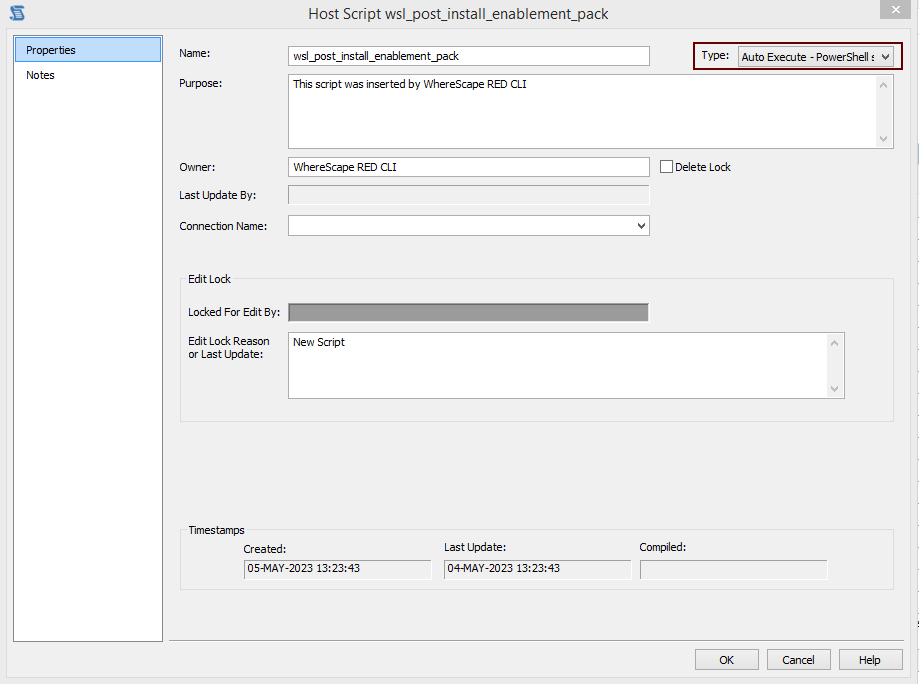
From the host script set a script type of wsl_post_install_enablement_pack as Auto Execute - PowerShell Script
Important Upgrade Notes
If RED upgrade the repository option is chosen.
This enablement pack will overwrite any existing Source Enablement Pack UI Configs:
Connection UI Config | Load UI Config |
Amazon S3 | Load From Amazon S3 |
Azure Data Lake Storage Gen2 | Load From Azure Data Lake Storage Gen2 |
Google Cloud | Load From Google Cloud |
To ensure existing Source Enablement Pack connections and associated Load Tables continue to browse and load:
Go into UI Configuration Maintenance in RED before installing this Enablement Pack and rename the affected UI Configurations. While the updated Load Template will work with the previous Source Enablement Pack, we recommend moving these earlier versions of Load Tables to newly created Parser-based connections following this install. The earlier versions of the Source Enablement Pack will be deprecated following this release.
Post Install Steps – Optional
If you used the script Setup Wizard for installation, then the following optional post-install steps are available.
Configure Connections
There were two connections added that will optionally require your attention:
- Connection: 'Database Source System' - this connection was setup as an example source connection,
- open it's properties and set it up for a source DB in your environment
- or you can remove it if not required
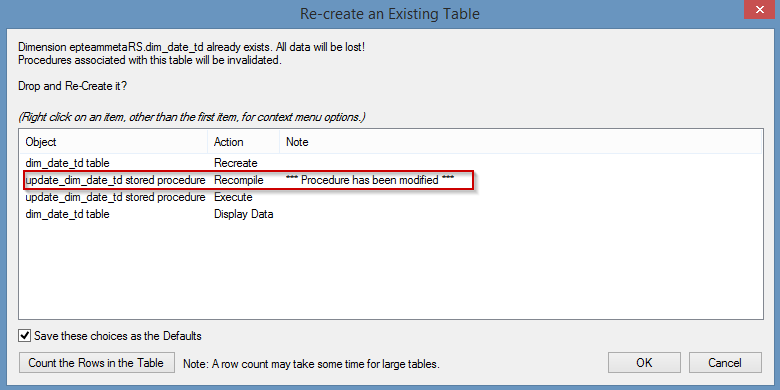
- Execute Update Procedure for dim_date_td to Initialize Date Dimension for Target
| Note |
|---|
Please avoid regenerating the procedure update_dim_date_td as it is a custom procedure. |
Source Enablement Pack Support
Source Pack Name | Supported By Teradata | Supported Features | Prerequisites |
Amazon S3 | Yes | Load Template, Source
| Teradata Access Module for S3 (CSV) - Create a credential file by following the documentation linked below, and paste the directory location of the credential file into the 'Amazon S3 Config Directory' Extended Property: |
Azure Data Lake Storage Gen2 | Yes | Teradata Access Module for Azure Blob (CSV) - Create a credential file by following the documentation linked below, and paste the directory location of the credential file into the 'Azure Config Directory' Extended Property: | |
Google Cloud Storage | Yes | None | |
Windows Parser | Yes | Refer to Windows Parser Guide | |
Database | Yes | Load Template, using TPT Load
Load Template with Script based | None |
Troubleshooting and Tips
Run As Administrator
Press the Windows Key on your keyboard and start typing cmd.exe, when the cmd.exe icon shows up in the search list right click it to bring up the context menu, select Run As Administrator
Now you have an admin prompt navigate to to the folder where you have unpacked your WhereScape Red Enablement Pack to using the 'cd' command:
C:\Windows\system32> cd <full path to the unpacked folder>
Run Powershell (.ps1) scripts from the administrator prompt by typing the Powershell run script command, for example:
C:\temp\EnablementPack>Powershell -ExecutionPolicy Bypass -File .\Setup_Enablement_Pack.ps1
| Note |
|---|
In the event you can not bypass the Powershell execution policy due to group policies you can instead try -ExecutionPolicy RemoteSigned which should allow unsigned local scripts. |
Windows Powershell Script Execution
On some systems, Windows Powershell script execution is disabled by default. There are several workarounds for this which can be found by searching the term "Powershell Execution Policy".
Here is the most common workaround that WhereScape suggests, which does not permanently change the execution rights:
Start a Windows CMD prompt as Administrator, change the directory to your script directory, and run the WhereScape Powershell scripts with this command:
cmd:>Powershell -ExecutionPolicy Bypass -File .\<script_file_name.ps1>
Restarting failed scripts
Some of the setup scripts will track each step and output the step number when there is a failure. To restart from the failed step (or to skip the step) provide the parameter -startAtStep <step number> to the script.
Example:
Powershell -ExecutionPolicy Bypass -File .\<script_file_name.ps1> -startAtStep 123
| Tip |
|---|
| To avoid having to provide all the parameters again you can copy the full command line with parameters from the first "INFO" message from the beginning of the console output. |
Python requirements for offline install
Additionally to the base Python installation being required, the WhereScape Python Template set also requires certain additional Python libraries. The install scripts use the PIP (package manager) to download these libraries, however, for offline installs, you will need to install the required libraries yourself.
Required Python libraries/add-ons:
- pywin32-ctypes
- python-tds
- pywin32
- glob2
- gzip-reader
- regex
- pyodbc
To create view with cross database reference
For cross database reference view creation user needs to run this command "GRANT ALL ON DATABASE1 TO DATABASE2 WITH GRANT OPTION"
If a valid RED installation can not be found
If you have RED 10.x or higher installed but the script (Setup_Enablement_Pack.ps1) fails to find it on your system then you are most likely running the PowerShell (x86) version which does not show installed 64-bit apps by default. Please open a 64-bit version of Powershell instead and re-run the script.